


Orgonite
Orgonite
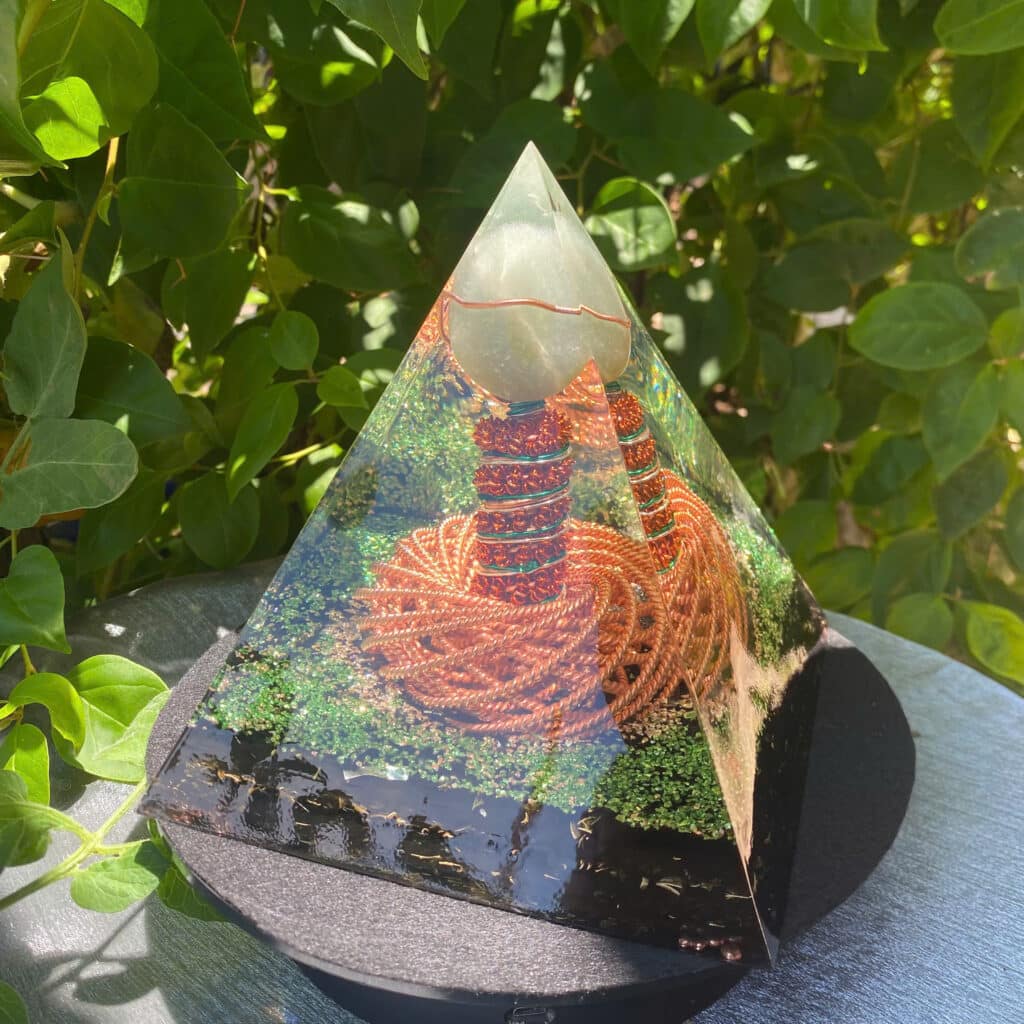
Orgonite is an atmospheric conditioner, an energy filter. Orgonite is a substance that generates positive orgone, revitalizing and balancing what is in its environment.
History
Orgone is a term coined by Dr. Wilhelm Reich to describe a hypothetical form of energy that he claimed to have established the existence of. His results were never replicated, and the orgone theory is considered pseudoscientific. Note: In this text, from the historical interpretation to pseudoscientific, some scientific terms are used in the way Reich used them; the meaning of these terms may differ greatly or even be incompatible with those used in science contemporary to Reich, and even more so in current science.
Wilhelm Reich, a psychiatrist and psychoanalyst, wondered whether sexual desire, a basic hypothesis of Sigmund Freud’s psychoanalysis, was a real energy. He then began experiments on the bioelectricity of emotions, which he continued to study, after positive results from this research, even in single-celled organisms and then in the atmosphere. These various studies led him to claim the existence of orgone, a discovery whose potential he presented as closely related to the sensory abilities of the researcher.
Orgone is thus described as a fundamentally new cosmic energy, obeying functional laws rather than mechanical ones, present everywhere… Aware that his claims might arouse skepticism from a serious researcher, W. Reich admitted that he had taken many years before finding the courage to acknowledge and present the richness of the facts and connections he had highlighted. Therefore, he carefully prepared the presentation of the processes marking and allowing his research to remain, as he wished, on the basis of reason and scientific discussion.
Biological Orgone
It was observations in the field of biology, which he emphasized around 1933, that led W. Reich to define the concept of orgone. In particular, measurements of potential changes that, according to him, accompanied sensations of pleasure and anxiety suggested to him the idea of the existence of a type of biological energy present in living organisms. Assuming that organ sensations are manifestations of this energy in motion, the comparative analysis of the effects of electric current on muscles (in living bodies and in test tubes) and the effects (reactive or non-reactive) perceived through the senses near electromagnetic radiation emitters made him think that it would not be electric current. After various and precise investigations, he found himself faced with an impressive series of contradictory facts… inexplicable within the strict framework of known forms of energy, but long known in the fields of biology and natural philosophy. Revisiting the theories of biologist Hans Driesch (Entelechy), philosopher Henri Bergson (life force), and finding that Louis Pasteur’s experiments themselves were insufficient to explain the origin of life, he declared himself dissatisfied with any of them. Considering Paul Kammerer’s hypothesis correct, he asserted with confidence that the work of any biologist highlights the existence of enormous energies controlling every manifestation of living matter and condemns the lack of consideration by the scientific community for what he believed to be the truth. He then clearly saw that the energies performing this work (on a planetary scale) could only originate from inanimate matter.
He defines at least twelve properties to describe a specific energy with biological effectiveness:
- Fundamentally distinguishable from electromagnetic energy
- Present in inanimate nature independently of living organisms
- To satisfactorily clarify the sentient-inanimate relationship
- Acts even on organic materials, non-conductive and animal tissues (unlike galvanic electricity)
- Permeates the entire body (not just a few nerve cells or individual cell groups)
- Simply explains the contraction-relaxation function exhibited by living organisms
- Produces heat
- Explains sexual attraction
- Explains organisms’ lack of sensitivity to electromagnetism
- To distinguish what is added to a chemically complex protein to turn it into a living protein
- To reveal the processes leading to symmetrical shapes and explain the basic function of structure formation
- Finally, to clarify the existence of living matter only on the Earth’s surface
He developed a series of experiments including microscopic observations of phenomena that, according to him, occur at the boundary between living matter and inanimate matter. A document titled “Die Bione, zur Entstehung des vegetativen Lebens”, published in Oslo in 1938 by Sexpol-Verlag, presents in two parts (statement of facts, then its interpretation), the results of experimental work on the “origin of vegetative life” conducted by W. Reich in Oslo at that time. The combination of two physical functions (tension-charge, discharge-relaxation) that WR considered characteristic of the living phenomenon was sought at the level of the most primitive biological functions, with the stated aim of measuring the extent and relevance of this explanation for what is presented as reproducible laboratory facts. WR then believed he had experimentally proven the existence of developmental stages from inert and inanimate matter to living matter, and in nature, the process of becoming living from inorganic matter occurs hourly, minutely.
He inferred the existence of a common biological phenomenon from decomposing tissues in aqueous environments, similar to the appearance of white and red blood cells from bone marrow, or eggs and sperm from gonadal epithelium.
Atmospheric Orgone
During research on Bion cultures, Wilhelm Reich observed unusual skin burns, optic nerve irritations, and conjunctivitis on himself, which were also reported to have occurred to various other operators during work in dark rooms. He observed that photographic plates became unusually fogged during experiments.
He then attempted to objectify these phenomena.
A negative test for his “biological cultures” with a radium-sensitive electroscope (performed by Dr. Moxnes at the Oslo Cancer Center) led him to rule out the idea of a form of radiation due to obscured photographic plates.
He then sought to highlight a possible relationship with static electricity. Thus, he claimed to have observed that rubber gloves placed near the crops quickly acquired static charge (detectable by electroscope), similar to when exposed to sunlight.
He then believed that, like solar energy, the “energy” seemingly emitted from his cultures “in a biological way” recharged organic-origin substances. Since the common thread in his work began many years earlier with observations of measurable electrical phenomena on the skin during orgasm, he then combined “orgasm” and “organic” to form the word “orgone” to name this “energy”.
Orgone energy seemed to him to have properties of being absorbed and retained by organic matter, and conversely attracted and immediately repelled by a metal plate, regardless of whether it passed through it or not. He then placed his cultures in a metal box covered externally with an organic material. By creating a hole in the front of the device and fitting a lens from a film viewer into it, he claimed to be able to observe more easily, without any light source, the radiation allegedly emitted from a dozen Petri dishes containing his cultures placed in the device. According to him, some people, besides himself, were able to “clearly observe moving blue vapor streams and transparent rays, yellowish-white in color, in the form of lines and points” by this means. However, the radiation in question seemed to persist without any presence of the cultures. Then, by observing the night sky through a tube with black inner walls, and by particularly directing towards dark areas of the sky, he claimed to observe the same radiation seemingly emitted from his multilayer disks. By placing a magnifying glass at the end of the tube as an eyepiece (orgonoscope), he said he saw the radiation intensified. He claimed the atmospheric origin of orgone.
From 1934 to 1940, W. Reich developed his theories based on observations of “atmospheric orgone”. He claimed to be able to concentrate it with multilayer devices using materials that attract or repel orgone. He measured its concentration with various manipulations and measuring devices. But above all, he claimed to have observed differences between the internal temperature of the “orgone accumulator” and that of the control box (without internal metal). While he expected these temperatures to match the surrounding environment, he observed an increase (about 2°C outside the building, without solar radiation) inside the box. He attributed this temperature increase to the kinetic braking of “orgone radiation particles” by reflection on the internal metal walls of the accumulator. According to him, these differences, nearly zero in rainy weather and very strong in sunny weather but not directly exposed to sunlight, seemed to him to contradict the second principle of thermodynamics. The idea of the existence of an orgone process tending to restore energy lost to entropy formed the basis for his meeting with Albert Einstein in 1941.
Meeting with Albert Einstein
In a letter dated February 7, 1941, Einstein expressed his opinion on the observations he had made with the “orgonoscope” provided by W. Reich. First, he stated that he had limited himself to the temperature phenomenon because he could not rule out subjective impressions regarding luminous manifestations. Then, he stated that the thermometer box (in the original setup) consistently displayed a temperature higher by about 0.3 – 0.4° than the freely hanging thermometer. He was then led to observe that at the bottom of the table, the average temperature was about 0.6° lower than at the top of the table, where the thermometer box was placed. He considered this a decisive fact and pointed out the modifications he had made to the original “orgonoscope” setup to support his explanation of it. He concluded: the temperature difference has nothing to do with the windows and metal box, but only with the horizontal plate above (of the table). In the first 10 pages of the reply dated February 20, 1941, W. Reich then proposed two counter-experiments to Einstein, noting additionally that disassembling the box creates too many uncontrollable negative error sources. In the protocols of these experiments, he took into account the argument related to the table (particularly by modifying air circulation or by eliminating this support) and claimed that his hypotheses were supported by the different rates at which corresponding electroscopes discharged inside and outside the device.
In the remaining 16 pages, he described in nine points the biophysical framework of the temperature phenomenon, pointing out, by citing other experiments and observations he conducted, various scientific and medical aspects and the significance of his work. He particularly emphasized how his research was placed within the framework of the fight against cancer and ultimately requested Einstein’s collaboration in this goal. He confirmed this attitude in the main part of the subsequent letter dated May 1, 1941. Finally, he pointed out a new experimental protocol showing, according to him, that orgone energy concentration is best achieved in soil exposed to solar radiation. According to the cited documentation, Einstein did not respond to these two letters. His two subsequent letters, dated February 15 and 24, 1944, and like the following letters from W. Reich, were not experimental in content, but related to effects assessed as harmful to both regarding the consequences given to their initial meeting and the subsequent first letter exchange.
After the meeting with Albert Einstein, W. Reich continued to establish what he considered the characteristics of atmospheric orgone. The luminous phenomenon he claimed was objectified by magnification, and the observed temperature increase in the multilayer box did not indicate to him the nature of orgone energy. Continuous measurements of electroscope discharge rates in open air and in orgone accumulators, combined with temperature measurements, were then conducted over the period from July to August 1941. The fact that, in his experiments, electroscopes discharged more slowly in the box than in the room and outdoors seemed to him explainable in the sense that the energy potential difference between the charged electroscope and the box would be lower than between the electroscope and the surrounding air. This explanation supported his idea that there is a specific energy concentration in the box, which also exists in the atmosphere but more diluted. Comparing calorimetric measurements of objects in the box and electroscope discharge times allowed him to rule out the hypothesis of an energy of electrical nature, with opposite effects on electroscopes in terms of concentration (increasing rather than slowing discharge).
The spontaneous oscillation of a pendulum, placed 0.5 cm from a fixed metal sphere, established for W. Reich the existence of an oscillating orgone energy field on Earth. He observed with a telescope magnifying 185 times, over two summer months in 1944 and 1945, a wavy and pulsating motion in the atmosphere, moving almost always from east to west, towards the lake shore from the opposite southern shore, daily, from morning to evening and redirecting every 30 minutes. This observation confirmed in his eyes the basic pulsating function of orgone energy. He also inferred that the globe is not only surrounded by an atmosphere with a certain chemical composition but also endowed with an orgone energy envelope. As early as the summer of 1947, he reported observing a significant reaction in a Geiger-Müller counter that had absorbed orgone energy through prolonged exposure for weeks in a high-concentration orgone atmosphere and that orgone energy has the ability to develop a propulsive force. Obtaining luminescence from a rare gas without any other direct contact, in an experiment he detailed, seemed to him to establish that orgone luminescence is the result of contact between two orgone energy fields. In the direction that this hypothesis opens, he then claimed to be able to clarify how humans originate from nature, based on examining the fundamental functions governing inanimate and sentient nature. Thus, he began to highlight the properties of cosmic orgone.
Cosmic Orgone
W. Reich, based on the observations he reported, established a link between the microcosm and the macrocosm. In the first scope, the luminous units he claimed to observe in a dark cabinet lined with metal foil seemed to describe in space an elongated cycloid (rotating wave). He then hypothesized that a superposition process of two cycloid units, massless, of highly excited orgone, accompanied by kinetic energy loss; that the rhythm of the cycloid motion decreases significantly; that the direction of motion is bent in a pronounced way, that the elongated cycloid motion gradually turns into rotational motion in place. And for him, it is precisely in this stage of the process that inert mass appears from the slowed motion of two or more superimposed orgone units. Applying to celestial bodies his hypothesis of the functional relationship between the motions of primordial orgone energy and matter, he believed this capable of rationally explaining why they progress in spiral motion, why the sun and planets move in the same plane, in the same direction, merging in space into a unified group of rotating celestial bodies. He added that gravity also includes, according to him, an initiation related to the orgone attraction force observed in biological experiments around organisms (attraction of the least charged system by the most charged system), while distinguishing orgone attraction between two energy waves and gravitational attraction between two material bodies. Then, for him, an orgone energy field seems necessarily subject to the attraction of the nucleus. As a result, the once homogeneous cosmic ocean would separate into a primary orgone energy stream and a secondary orgone energy stream. These working hypotheses seemed to give him certain advantages, as they allow replacing on one hand the idea of empty space with a real, measurable, observable field of physical nature, and on the other hand the idea of gravitational force that the sun would exert at great distances on all planets, with a cosmic orgone energy stream within the galaxy pulling the sun and planets into the same plane and in the same direction. He presented observations seemingly supporting these hypotheses: the shape of spiral galaxies with two or more arms illustrates in his eyes the high probability of his working hypothesis on the formation of spiral nebulae from the superposition of two or more cosmic orgone streams. The colors of auroras, their sometimes pulsating and wavy motion, according to him, resemble the luminescence appearing from bion cultures (along with other manifestations) and the motions he claimed to have observed in experiments to prove biological orgone.
A more specific analysis of the features of the aurora borealis, notably the position in equatorial coordinates of the central belt and the extent and shape of observed luminous points, led him to hypothesize that two energy fields are at work, a southern and a northern field, mutually exciting their luminescence. He determined, by calculations and observations of several aurora borealis in 1949 and 1950, that they are 62° apart and their interaction would justify the 23°5 deviation of the ecliptic from the equatorial plane. This assertion led him to organize controversial meteorological frequency experiments in the Arizona desert, concretizing what he specifically inferred from observing aurora borealis and storms. He then specifically explained their shapes, their rotation directions, and especially their movements, in which he detailed observations made in 1948 and 1949. These features also seemed to illustrate the superposition phenomenon of two cosmic orgone streams, a process he described as being at the root of the genital embrace desire, and in this sense, the foundation for human rootedness in nature.
Properties of Orgone
It is claimed that Orgone has the following characteristics:
- Any material can act on orgone by attracting and absorbing it, or repelling or reflecting it.
- For example, it can magnetize ferromagnetic conductors without orgone needing to carry magnetism.
- Similarly, it can impart static charge to insulators without orgone needing to be subject to static electricity.
- It will react to the presence of radioactive material or overly strong electromagnetism by causing significant interference in a way very similar to the reaction of stimulated protoplasm.
- It can be excited, compressed, and is capable of expansion and contraction. Orgone is said to maintain mechanical tension in a certain environment or in a certain substance, changing over time, often in a cyclical manner.
- It would be the medium for conveying emotions and perceptions, through which we connect to the universe and become close to all living beings.
- It is said that there is positive orgone (POR) and negative, harmful orgone (Deadly Orgone Radiation or DOR).
- Reich pointed out that orgone energy allows energy transmission that reduces entropy, making orgone a constructive energy in Reich’s terms. In other words, his theory does not support the second law of thermodynamics.
Interpretation
According to W. Reich’s View
Wilhelm Reich believed he had provided the means to verify that, without abandoning his scientific stance, we can highlight in the universe a physical energy operating at the root of all existence; energy (…) that can be controlled, directed, and measured by human-made instruments such as thermometers, electroscopes, telescopes, Geiger counters, etc.
Linking the origin of thought to orgone energy, he hypothesized the chronology of the emergence of the consciousness phenomenon: Cosmic orgone would begin to move towards self-perception through many eras, as soon as it finds itself confined in a membrane network (protozoan stage), the first dissociation of living matter and non-living matter. Then, a sensation would be added to the objective plasma flow, the first self-perception of this flow (stage represented by the worm or slug). It is this orgone sensation that would be expressed in the superimposition desire of the sexual process. At the stage of large mammals, the objective energy flow and the sensation of flow would still have a close link, the bioenergetic context (at this stage) entirely dominated by pleasure, anxiety, anger. But for reasons he believed he could clarify based on his clinical experience as a psychiatrist and psychoanalyst, he noted that most humans have lost contact with the natural flow of orgone energy.
And he asserted, in the final analysis, that it is cosmic orgone energy that perceives itself in the perception of the Self, in our desire to perfect our knowledge.
According to Modern Partisan Views
From a philosophical perspective, orgone is the term that gives essence to the idea we have of life as a whole, global, without any specific fixation and yet giving motion to everything, as a set and synthesis of individuals, as specificity and uniqueness at the same time, as a medium of individuality integrated into a whole, being this whole and this individuality linked, including this whole, on one hand, in the form of enduring eternity, irresistible and on the other hand, individuality in the form of temporary, ephemeral, the reality of the whole in its specific and unique manifestation. It is in this that orgone manifests only through its energy, because no one can grasp the whole without losing themselves in it, without dissolving, meaning losing their specificity, without reuniting with the whole! Life is everywhere, because orgone is everywhere, and vice versa. Nothingness does not exist for life, absolute absence is an idea of the human mind, not of free life, of orgone. This is why orgone can only exist and in which its concept, the “idea of the idea” of orgone, expresses infinite interest, because it touches life, death as a transformation of life, death as a moment of life in its entirety, and the absolute moment of life as an individual manifestation. Orgone and its concept are terrifying, like life, because each person precisely holds this globality, this overwhelming globality and before which humans can do nothing, absolutely nothing, because it surpasses them, because life surpasses them; except to kill it when they can no longer bear this surpassing. At most, they can soothe their existential anxiety by speculating about this living being, but not about the existence of this living being, when they forget that they are still alive and that life is also about letting go of it, according to its process.
In general, orgone energy flows in a current or stream from one place to another in the atmosphere, but overall it maintains an east-west flow, evolving with the Earth’s rotation and slightly faster than it. The orgone energy flow in Earth’s atmosphere influences changes in air circulation patterns; the function of atmospheric orgone is the basis for the development of storm potentials and influences air temperature, pressure, and humidity. The function of cosmic orgone energy also operates in space, influencing gravitational phenomena and the sun. However, the energy of free-mass orgone is not one of these physico-mechanical factors.
In the living world, the properties of orgone energy come from life itself, very close to the old concept of vital force, or vital impetus. Additionally, the functions of orgone energy are the basis of the main processes of life: the pulsation, current, and charge of biological orgone determine the movements, actions, and behaviors of protoplasm and tissues, as well as the intensity of “bioelectric” phenomena. Emotions are the ups and downs, charging and discharging of orgone within the membrane of an organism, just as weather is the ups and downs, charging and discharging of orgone in the atmosphere. Both organisms and climate react to the prevailing characteristics and state of living energy. The functions of orgone energy are clearly manifested throughout Creation, in bacteria, animals, storm clouds, hurricanes, and galaxies. Orgone energy not only charges and animates the natural world.
Legal Perspective
Results Cannot Be Reproduced
Reich considered his experiments reproducible; many experimental difficulties, some of which Reich highlighted, made it impossible to reproduce the results the author published. These failures led the few scientists studying them to attribute them to errors and disagreements on interpreting the results Reich claimed to have obtained and prevented the scientific community from accepting his thesis as a valid theory.
Therefore, if today the orgone theory is considered pseudoscientific, some thought groups still continue to refer to it to explain certain phenomena. Some groups seek to capture and transmit orgone through machines with applications from medicine to physics, a movement initiated by Reich himself. Orgonite objects, which proponents explain work thanks to this energy, are the most famous objects. Some people, including Reich, have been convicted of fraud or illegal medical practice using machines that, according to them, operate on this principle. Although there is no presumption of guilt, claims about therapeutic properties require supporting one’s arguments with verifiable evidence. When Reich claimed that his orgone accumulators could have anti-cancer properties, he put himself in the position of having to prove what he said.
After verification by the Food and Drug Administration, a public agency regulating the production and sale of food and drugs in the United States, a court in that country followed this opinion and ruled that orgone does not exist. Wilhelm Reich was banned from renting orgone accumulators in the United States. Considered dangerous, his equipment was destroyed and his books were burned.
According to Critics’ Views
At the Bottom
This is an analogy of vitalism, the doctrine of spontaneous generation that attempted to explain life in ancient and medieval times until completely refuted by Louis Pasteur and the schools of physiology (now biophysics) at the beginning of the 20th century. There is no way orgone is taught in science faculties worldwide today.
There is no reproducible experimental evidence for orgone or bions, despite some attempts by various organizations, some of which are independent. Since the reproducibility criterion is not established, orgone is not science and is therefore pseudoscience.
The orgone doctrine contradicts many other doctrines, for example:
- In thermodynamics, entropy cannot have a negative value by definition (see the Second Law of Thermodynamics), which is implied by orgone theory.
- Orgone theory contradicts current principles of physiology.
In addition to the inability to reproduce Reich’s experimental results, these results are rejected because they are easily explained by lack of mastery of experimental protocols and lack of rigor in experimentation (unclean instruments, etc.). On the other hand, the differences in conclusions drawn from Reich’s results are notable. In other words, even if the experiments were reproduced, they would be considered irrelevant by the scientific community to validate orgone theory. Finally, the scientific and medical inferences seem completely dangerous and of course unfounded even if the theory were validated.
The scientific view of orgone theory can be summarized as: unreliable results, hasty reasoning, dangerous inferences.
On the Form
The theory described by Reich uses terms unfamiliar to science or quite outdated at the time this theory was developed, for example:
- He spoke of galvanic electricity in the 1940s, although this term had been completely obsolete and meaningless to physicists for decades.
- He used the word medium without defining it precisely and in a sense never used before, and subsequently not used in other scientific publications. This term has many interpretations.
Source: Wikipedia
Orgonite
Karl Hans Welz was born in Tyrol, Austria. He was passionate about science in general and the stars in particular from a very young age. He began reading books on astronomy, astrophysics, mathematics, and physics. He studied hypnosis and perfected his autogenic training process, eventually starting to practice Hatha Yoga. These practices brought him amazing results that encouraged him to explore other sciences outside his academic curriculum.
He studied and practiced astrology, magic, runes, and many different forms of techniques such as astral travel and clairvoyance. He studied the works of Mesmer, Korschelt, Baron Karl Von Reichenbach, Nicolas Tesla, Georges Lakhovsky, Wilhelm Reich, and many others. At age 19, he began postgraduate studies in mathematics and physics. He made many trips to different countries with diverse cultures and traditions, where he learned a lot about using Life Force from the Adepts.
During his stays, he continued studies in general semantics, radionics, Reichian psychology, and Orgone physics. Shortly after arriving in the United States, he built his first orgone accumulator and conducted many experiments on plants in particular. A few years earlier, he had built a device based on Korschelt’s plans, which turned out to be an orgone accumulator. Korschelt called this device the “Solar Ether Radiation Device”. The plans date from 1897. Karl Hans Welz also built and tested Mesmer barrels, probably the first orgone accumulator known to be built by a scientist, with the purpose of accumulating Life Force for healing. Thus, we see that Franz Anton Mesmer was probably the first to invent the life force orgone accumulator, 150 years before Reich!
Welz quickly realized that orgone energy could be projected to any distance and that this projection follows the principle of structural connection. This is an obvious fact to all magicians, shamans, wizards, and healers of all times, who have always known how to condense this energy. For this type of transfer, he had to develop a mathematical model explaining this phenomenon. This model also explains many amazing phenomena such as extrasensory perception, radionics, and astrology, among others.
In 1991, he invented the Orgone Generator, a significant advance over simple orgone energy accumulation created inside an accumulator. He quickly noticed that pulsating orgone energy (which an Orgone Generator can produce or a rotating planet) converts DOR (deadly orgone) into orgone energy beneficial to humans and their environment.
Some materials proved very effective in accumulating Life Force in our environment. Mesmer used oak barrels that he filled with iron filings to create an energy attraction effect. Assuming a relationship between Life Force and Magnetism, he quickly developed relatively strong accumulators. The result was a product of chance coincidence, not correct knowledge of the characteristics of life force (animal magnetism). Mesmer’s conclusions and successes remind us of Marconi, who believed that electromagnetic frequencies follow the Earth’s curvature, when he achieved the first signal transmission across EM frequencies. Although unaware of all the basic characteristics of electromagnetic frequencies at the time, it was effective. Both were pioneers in their era!
This led Welz to the idea of building a device that could accumulate and return life force: a simple orgone wand around which he wrapped a copper coil. By passing direct current through this coil, he obtained a magnet and a polarized life force field. By cutting the current, the field became “normal”. The next step was to create 2 such coils around 2 wands, one inside the other, and the coils connected in a way that they always oppose in polarity. Sending a weak electrical pulse through the coils, moving the magnetic fields back and forth, in turn caused movement of the life force fields, and thus a “new” orgone was created. Finally, he succeeded in obtaining a device independent of the orgone energy in the environment and producing New Orgone Energy.
Summary of Orgonite
Less than a year after inventing the Orgone Generator in 1992, Karl Hans Welz developed a much more effective material for accumulating orgone energy, which he named “Orgonite”. Its basic composition is a mixture of organic materials and metal dust that can be compared to an accumulator with hundreds of layers.
Source: http://www.aether.fr
Orgonite is an atmospheric conditioner, an energy filter. Orgonite is a substance that generates positive orgone, revitalizing and balancing what is in its environment.